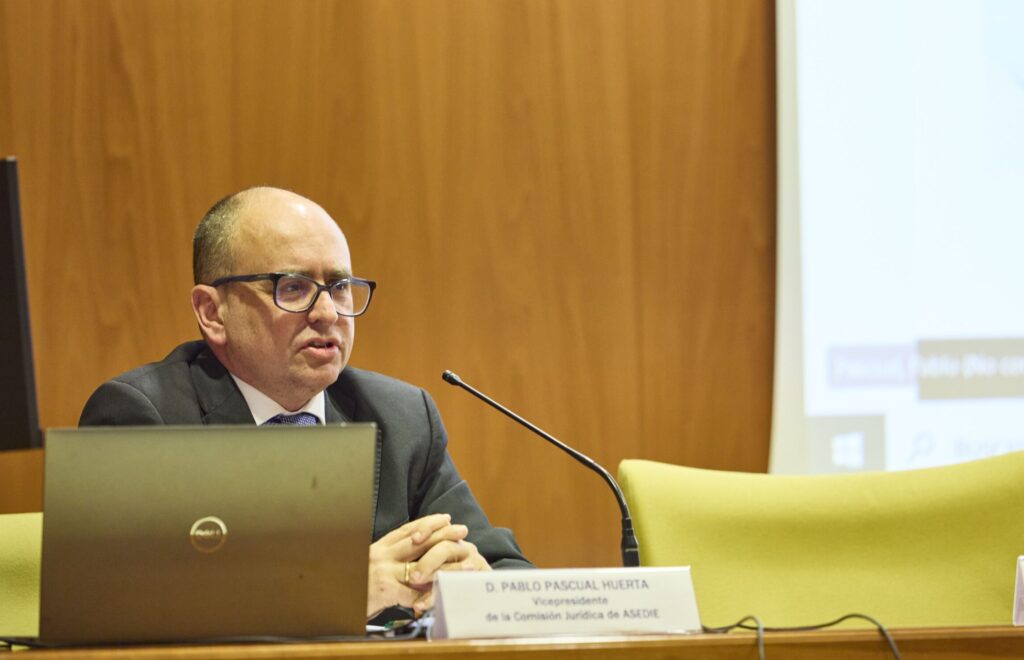
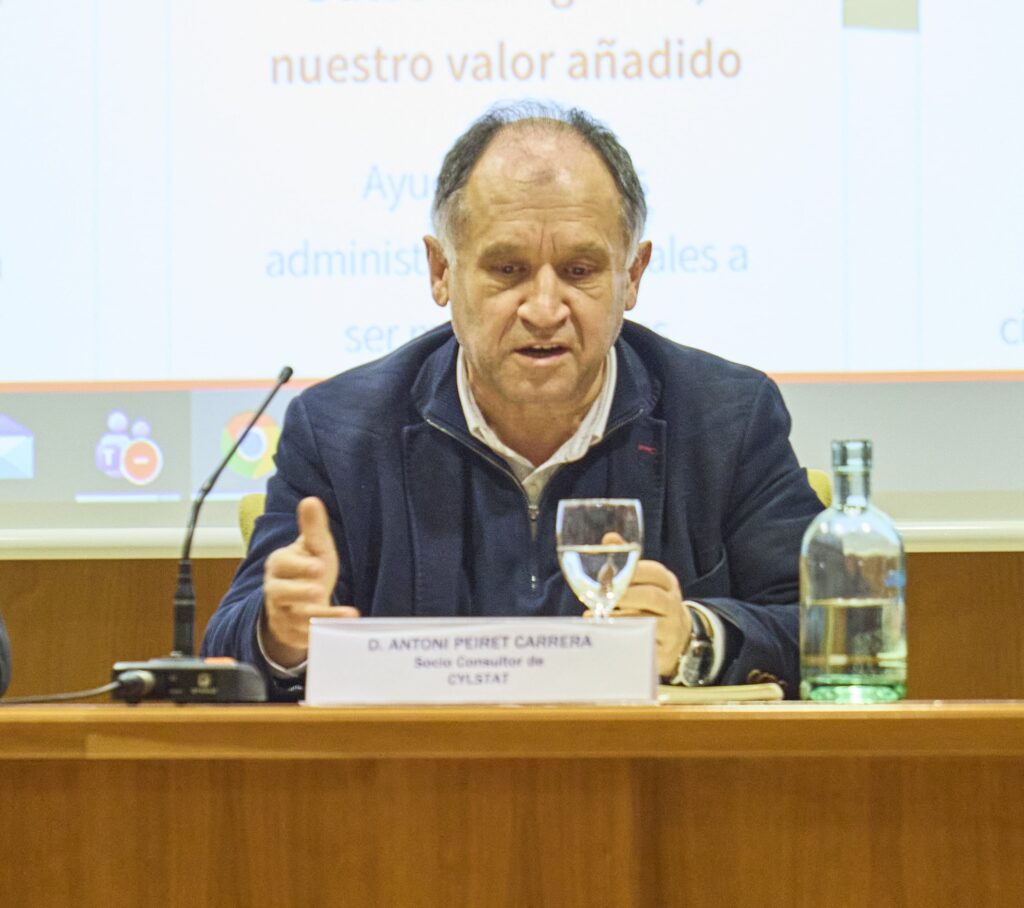
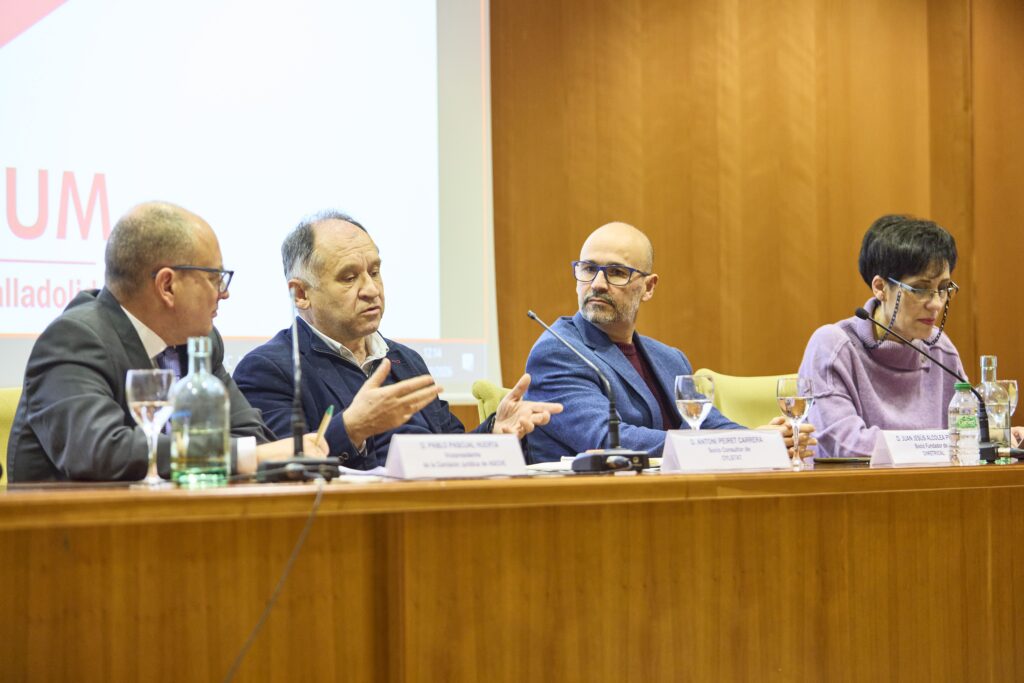
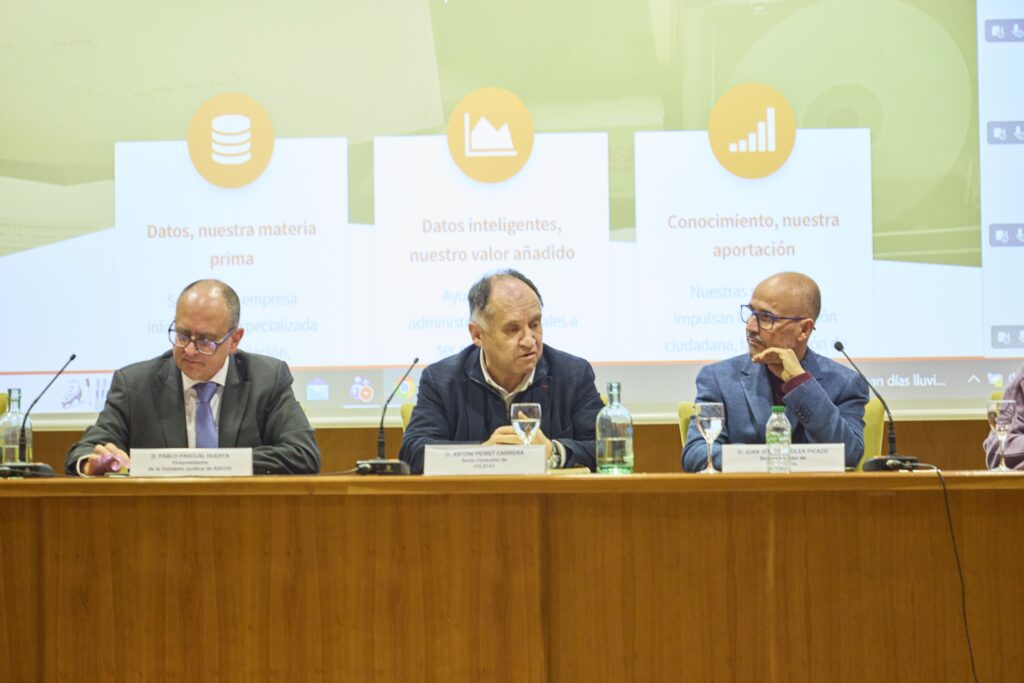
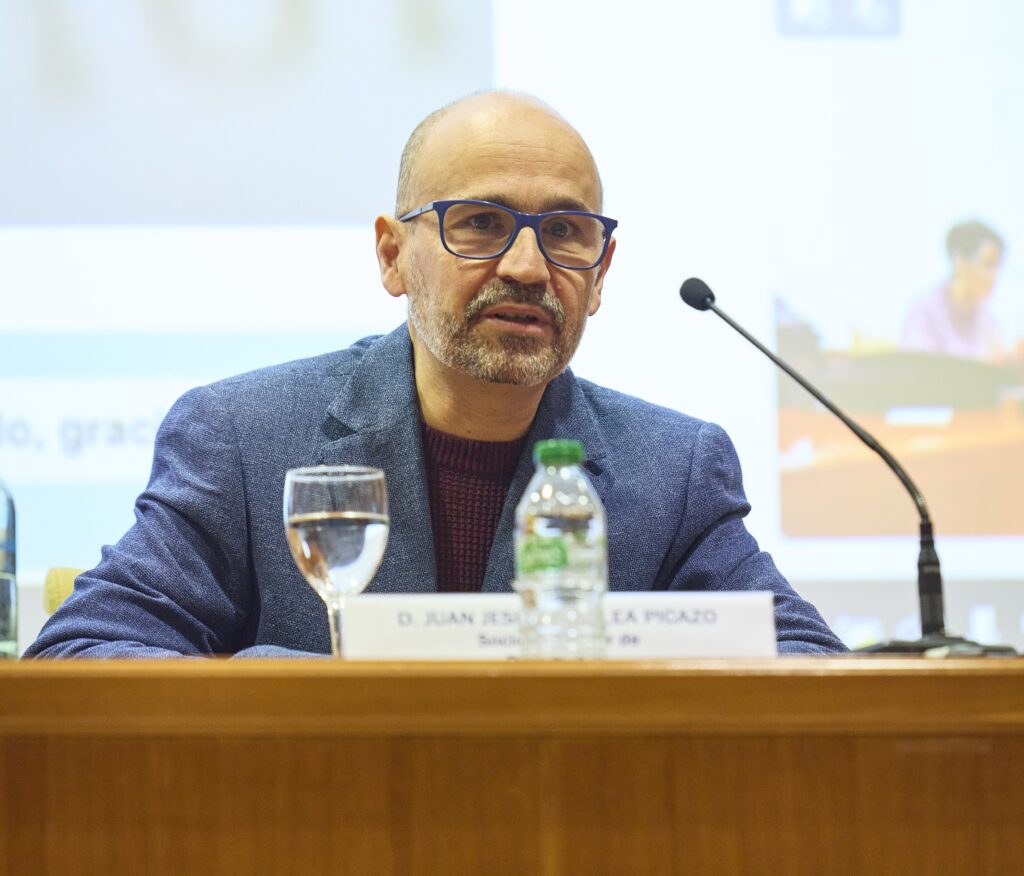
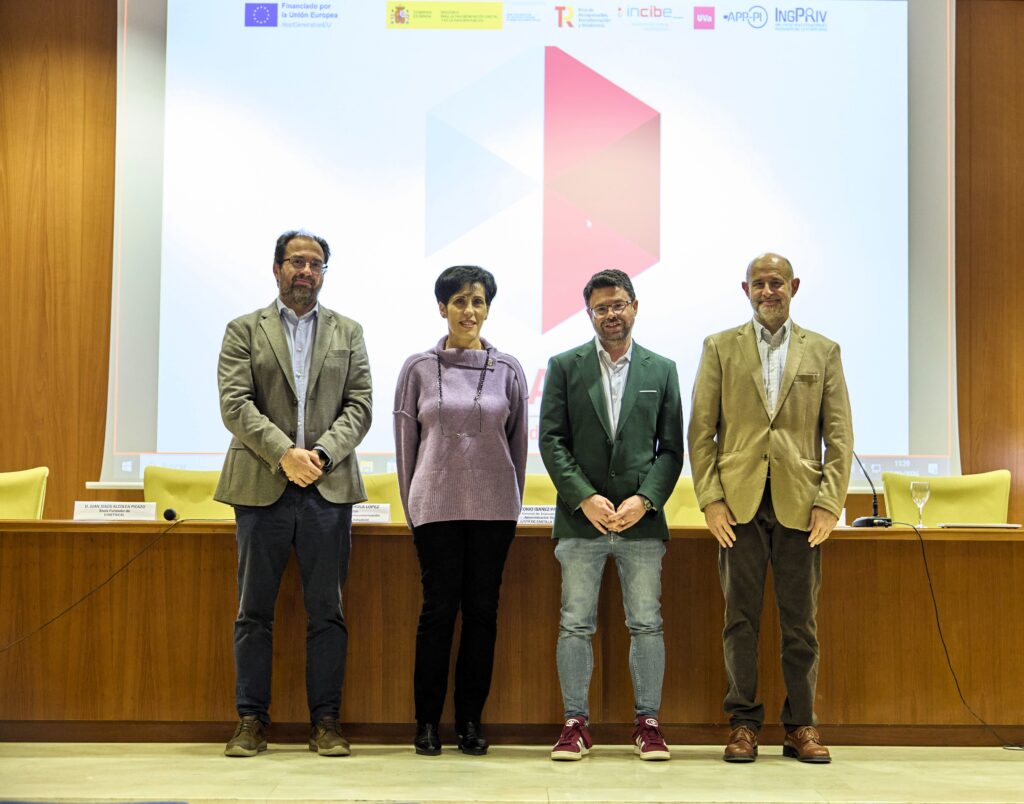
The roundtable discussion held during the 11th LexDatum Conference featured Pablo Pascual Huerta (ASEDIE), Antoni Peiret Carrera (Cylstat) and Juan Jesús Alcolea Picazo (Dimetrical). During the session, which took place at the School of Computer Engineering at the University of Valladolid, issues such as the current challenges of open data, the reuse of public sector information and the protection of personal data were addressed.
The debate was moderated by Mercedes Martínez González, who presented the members’ projects. Juan Jesús Alcolea Picazo explained what Universidata is, a coordinated and anonymised university data openness initiative. This open data can be used in teaching, academic and research settings to produce scientific articles, papers and other works. He also highlighted the organisation of datathons and pointed out that there is significant underutilisation of open data, as well as a great lack of awareness about the right of access to public information.
For his part, Antoni Peiret Carrera explained Cylstat’s work in the field of data governance and smart data, using national public statistical sources, which particularly helps small administrations to disseminate and showcase their data. Among his projects, he highlighted ‘Valladolid in figures’, a tool that allows users to consult multiple socio-economic indicators for the city.
The debate then began with an initial question about what advice to follow in relation to data if you are starting out as a company. Pablo Pascual emphasised the importance of seeking specialised legal advice from the outset and verifying what type of data is used, whether it can be reused in accordance with regulations and under what conditions it should be shared. For his part, Antoni Peiret defended the importance of data quality, while Juan Jesús Alcolea highlighted the need to carefully review usage licences before reusing public data sets.
The use of data to train artificial intelligence systems was also discussed, and Pascual argued that if the data used for training has been obtained legitimately, the resulting model will be equally legitimate. However, if a database whose origin is unclear is used, there is a certain legal risk. In addition, Alcolea warned that it is important to review the datasets of anonymisation algorithms, as they may be affected if advanced artificial intelligence tools are used.
Finally, the round table participants discussed Spain’s current situation with regard to the use of open data. Pablo Pascual explained that ASEDIE’s annual infomediary report is currently the only study of its kind in Europe, although he acknowledged that it is difficult to accurately measure the real impact of data reuse, as even the administrations themselves do not know exactly which companies exploit their data. In response, Antoni Peiret highlighted the role of the INE as a meeting point between producers and consumers of statistical data.
As conclusions, it was proposed that exhaustive inventories of available data from universities and the public sector be compiled, since in many cases, reusers do not request more data because they are unaware that it exists. In addition, participants confirmed that there is a great deal of ignorance about the open data available, as it is undervalued and underused by society, despite its great potential for decision-making in the business, academic and research environments.